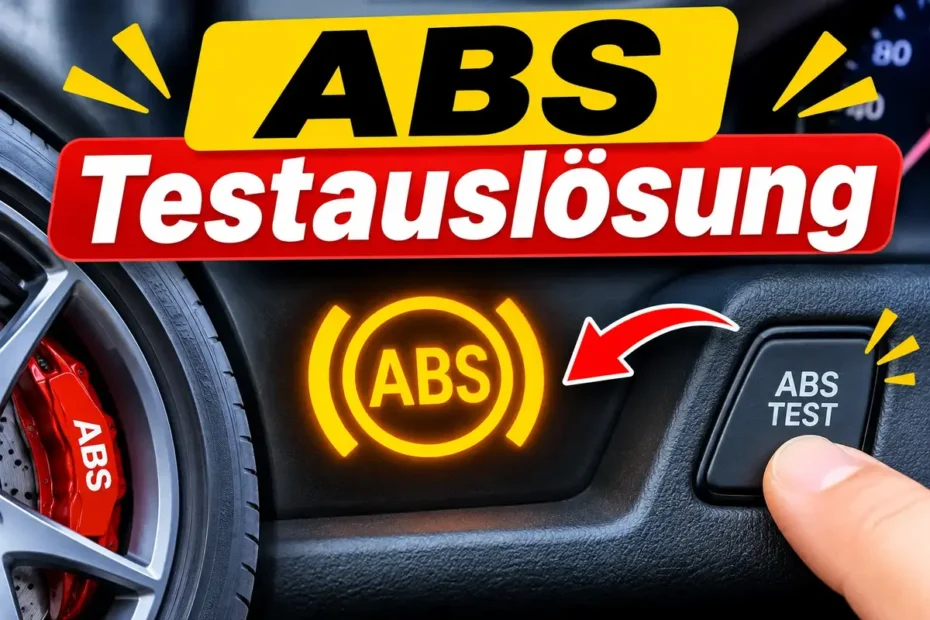
Spongy brake pedals and stubborn ABS warning lights jeopardize your safety on the road. Traditional manual bleeding methods often leave trapped air bubbles deep inside the hydraulic control unit. A proper abs testauslösung solves this critical problem. By electronically commanding the ABS solenoids to cycle, you purge hidden air pockets, restore pedal pressure, and guarantee that your braking system responds instantly during emergencies.
What Is an ABS Testauslösung in Modern Vehicle Diagnostics?
An Anti-lock Braking System (ABS) prevents wheel lockup during sudden stops. Over time, air enters the brake lines, or electronic valves become sticky due to degraded brake fluid.
When you run diagnostics, mechanics initiate an abs testauslösung to actuate the internal valves and run the internal return pump automatically. This electronic command tests the hardware without requiring physical vehicle motion.
The process opens high-pressure valves inside the module that remain closed during normal driving. It confirms whether the electronic control unit (ECU) can properly signal the hydraulic assembly.
text
+——————————————————————-+
| ABS DIAGNOSTIC FLOWCHART |
+——————————————————————-+
| [Vehicle ECU] —> Sends Signal via CAN-Bus |
| │ |
| ▼ |
| [ABS Module] —> Triggers Actuation Routine |
| │ |
| ├───────► Actuates Solenoid Valves (Opens/Closes) |
| └───────► Cycles Hydraulic Return Pump |
| |
| [Result] —> Purges Air & Verifies Real-Time Operation |
+——————————————————————-+
Why Is an ABS Testauslösung Essential for Brake Safety?
Standard brake pedal pumping cannot clear air trapped inside the secondary hydraulic circuits. If air remains trapped, your brake pedal feels soft, increasing stopping distances significantly.
Running an abs testauslösung guarantees that the secondary hydraulic circuit clears out residual air. This procedure ensures full hydraulic pressure across all four brake calipers.
Regular actuation tests also prevent solenoid valves from seizing. Inactive valves can fail during emergency braking, leading to unpredictable vehicle handling on slippery roads.
Key Symptoms That Indicate You Need an ABS Testauslösung
Your vehicle communicates system faults through specific warning signs. Recognizing these indicators early saves time and prevents component damage.
Watch out for these clear warning signs:
- Illuminated ABS Warning Light: The dash light remains lit after engine startup.
- Persistent Soft Pedal: The brake pedal feels mushy even after traditional fluid bleeding.
- Uneven Braking Force: The car pulls to one side when applying brakes hard.
- Unusual ABS Pump Noise: Grinding or buzzing sounds coming from the engine bay under braking.
- Stored Fault Codes: Diagnostic trouble codes such as C0035, C0040, or internal ECU fault flags.
Comprehensive ABS Diagnostic Comparison
The following table breaks down how different diagnostic procedures handle brake system servicing:
| Feature / Metric | Standard Manual Bleed | Vacuum / Pressure Bleed | Actuator Test (ABS Bleed) |
| Primary Focus | Master Cylinder & Main Lines | Brake Lines & Calipers | Hydraulic Unit & Solenoid Valves |
| Air Removal Capability | Low (Main circuit only) | Medium (Main circuit only) | Maximum (Purges internal valves) |
| Required Equipment | Wrench & Catch Bottle | Pressure Bleeder Kit | Bi-Directional OBD-II Scanner |
| Pump Activation | No | No | Yes (Automated electronic cycling) |
| Time Required | 30 – 45 Minutes | 20 – 30 Minutes | 10 – 15 Minutes |
| System Safety Check | Visual/Manual only | Pressure check | Full Electronic Hardware Verification |
Required Equipment for Executing the Diagnostic Routine
You cannot perform an active test with a basic code reader. Active tests require bi-directional control capability.
Gather these essential tools before starting:
- Bi-Directional OBD-II Scanner: Tools such as Ross-Tech VCDS, Launch X431, Autel MaxiSYS, or Bosch KTS.
- Stable Battery Charger: Keeps system voltage above 12.5V during diagnostic cycles.
- Brake Fluid Bleeder Kit: Catch bottles and clear tubing for collecting old fluid.
- Fresh OEM Brake Fluid: Sealed bottle of DOT 4 or DOT 5.1 fluid.
- Safety Gear: Protective gloves and eye goggles to handle chemical fluid safely.
Make sure your scan tool features software capable of supporting the specific abs testauslösung protocol for your vehicle make and model.
Step-by-Step Instructions to Perform the Actuation Sequence
Follow these practical steps to safely execute the activation procedure on your vehicle.
Step 1: Vehicle Preparation
Park the car on a level surface. Connect a battery maintainer to prevent voltage drops during software commands. Connect your bi-directional scan tool to the OBD-II port under the dashboard.
Step 2: Clear Stored Fault Codes
Turn the ignition ON with the engine OFF. Access the ABS/ESP module menu on your tool. Read and clear any historic error codes to ensure a clean test environment.
Step 3: Initiate the Actuator Test
Navigate to the “Active Test”, “Actuator Test”, or “Component Test” menu. Select abs testauslösung to begin cycling the electronic valves.
text
+——————————————————————-+
| SCAN TOOL INTERFACE STEP-BY-STEP |
+——————————————————————-+
| [Main Menu] –> [Control Units] –> [03 – ABS Brakes] |
| |
| [Select Function] |
| ├── Read Fault Codes |
| ├── Live Data |
| └── [03 – Actuator Test / Component Cycle] <=== SELECT |
| |
| [Execution Screen] |
| Status: RUNNING |
| Pump Motor: ON (Cycling 5s) |
| Front Left Valve: OPEN |
| Front Right Valve: CLOSED |
+——————————————————————-+
Step 4: Monitor Valve and Pump Cycle
Listen for the ABS pump to run and the valves to click open and close. Open the caliper bleed screws one by one when prompted by the scanner interface to push trapped air out into your collection bottle.
Step 5: Verify Pedal Feel and Re-Scan
Tighten all bleed screws to manufacturer torque specs. Depress the brake pedal several times to establish firm pedal feel. Run a final diagnostic scan to confirm no new error codes generated.
Understanding the Role of the Hydraulic Control Unit (HCU)
The Hydraulic Control Unit contains tiny electric solenoids, an accumulator, and an internal pump motor. These components adjust fluid pressure up to 50 times per second during hard braking.
During normal driving, fluid flows straight past these internal chambers. The secondary valves stay shut, locking in old fluid or trapped air.
Executing the electronic actuation opens these hidden channels. Fluid rushes through the secondary circuit, clearing contaminants and guaranteeing valve responsiveness when you need emergency stopping power.
How Active Actuation Differs From Standard Brake Bleeding
Standard gravity or pressure bleeding forces fluid through the primary lines. It completely bypasses the internal ABS motor channels.
If you replace a brake line or master cylinder, air inevitably gets sucked into the ABS block. No amount of foot-pumping will remove that trapped air.
Only a systematic abs testauslösung opens the electronic valves while running the internal pump motor. This forces the fluid to sweep through every internal passage, pulling out trapped micro-bubbles.
Common Errors During System Actuation and How to Avoid Them
Techs often hit roadblocks by skipping core diagnostic safety rules. Avoid these costly mistakes:
- Low Battery Voltage: Running actuator tests on a weak battery causes command drops. Always connect a battery support unit.
- Skipping the Bleed Screws: Running tests with closed bleed valves can over-pressurize internal seals. Open the valves when the scanner instructs.
- Ignoring Fluid Levels: The return pump empties the reservoir quickly. Keep the master cylinder reservoir full to prevent drawing in fresh air.
- Interrupting the Test Cycle: Forcefully switching off the ignition during active tests can lock up your diagnostic session or trigger software bugs. Let each sequence finish naturally.
Safety Guidelines When Triggering Actuator Tests
Electronic actuation creates sudden, high pressure changes inside the brake lines. Treat active testing with strict safety habits.
Keep hands clear of moving suspension parts or hot components. High fluid pressure can spray if fittings are loose. Wear eye protection throughout the entire workflow.
Never attempt an active component test while the vehicle is in motion unless the diagnostic software explicitly directs you to do a dynamic road test. Keep the vehicle in Park or Neutral with the parking brake set.
Top Diagnostic Tools That Support Active Testing
Choosing the right diagnostic software guarantees seamless component triggering. Here are industry-leading tools:
- Ross-Tech VCDS: The gold standard for Volkswagen, Audi, SEAT, and Skoda vehicles. Offers dedicated ABS pump bleeding channels.
- Autel MaxiSYS Series: Excellent multi-brand coverage with clear on-screen prompts for active testing.
- Launch X431: Comprehensive active test support for European, Asian, and American models.
- Bosch ESI[tronic]: OEM-grade software built directly by the premier manufacturer of ABS technology.
Selecting a tool with reliable abs testauslösung routines saves hours of troubleshooting on complex brake systems.
Interpreting Diagnostic Fault Codes After Component Activation
Once the actuation test finishes, check your scanner screen for status updates. The ECU reports pass or fail parameters instantly.
- Test Passed / Completed Successfully: Solenoid resistance, motor current draw, and fluid pressure feedback match factory baseline parameters.
- Code C0021 (Brake Pedal Pulse Sensor): Indicates mechanical resistance in the booster assembly or valve position faults.
- Code C0550 (Internal ECU Fault): Suggests internal electronic relay failure within the module circuit board.
- Code C0010 (Left Front Inlet Solenoid Circuit): Points to broken wiring, corroded harness connectors, or a burned-out solenoid coil.
Frequently Asked Questions
What does abs testauslösung mean in car diagnostics?
An abs testauslösung refers to an electronically commanded functional test that cycles the internal valves and pump motor of a vehicle’s Anti-lock Braking System using a diagnostic scanner.
Can you run an active ABS test without a professional scan tool?
No, basic OBD-II code readers only read engine codes. You require a bi-directional scan tool capable of sending active electronic control commands to the ABS module.
Is it safe to trigger component activation while driving?
No, perform stationary component activations while parked safely. Dynamic tests require specific test-track conditions under controlled environments.
How often should an abs testauslösung be performed?
Perform an abs testauslösung whenever you open the hydraulic brake system, replace major brake components, or struggle with a persistent soft brake pedal after manual bleeding.
Why does the ABS pump make noise during an abs testauslösung?
The electric motor inside the hydraulic unit rapidly cycles internal valves and pumps fluid. That buzzing or clicking sound indicates normal functional operation.
What should you do if an abs testauslösung fails to complete?
Check battery voltage first, as low power aborts tests. Verify electrical ground connections and clear all temporary DTCs before running the sequence again.
Restore Complete Braking Control Today
Proper brake maintenance requires more than just changing pads and rotors. Electronic systems demand precise diagnostic routines to operate at peak performance. Performing an abs testauslösung ensures clean hydraulic lines, responsive solenoid valves, and firm pedal feel when emergency stops happen. Connect your bi-directional scan tool, clear trapped air out of your hydraulic module, and execute an active component test today to keep your braking system in peak condition.